
By Triin Ülesoo, founder of Bite the Plant · November 2026
Digestive bitters for low stomach acid work through a simple signal: the bitter taste tells your stomach that food is coming, and your stomach answers by making its own acid. Low stomach acid is more common than most people think, especially with age and after years of acid-blocking medication. Heaviness after meals, burping and bloating are often its first signs. Digestive bitters give the stomach back the cue it has been missing.
In short
- Low stomach acid shows up as heaviness, burping and bloating soon after meals, especially protein-rich ones.
- It becomes more common with age, long use of acid blockers, chronic stress and some stomach conditions.
- Digestive bitters prompt your stomach to make its own acid, and the same signal calls for bile and enzymes.
- Take one pipette of bitters 5–10 minutes before a meal and hold the taste for a minute or two.
Jump to Bite the Plant bitters ↓
Do digestive bitters increase stomach acid?
Yes. The bitter taste on the tongue signals the stomach through the vagus nerve, and the stomach releases its own acid and pepsin before the food arrives. Nothing is added from outside. The acid comes at mealtime, when it is needed, and between meals the stomach returns to its own rhythm.
MARI
I have been taking bitters for a while now. I find the taste very pleasant. They are an important support for my body to produce stomach acid better. A nutritionist recommended them when my problems with stomach acid and bile production came to light. I am very glad I discovered them.
→ Try bitters before your next protein-rich meal
Signs of low stomach acid
Stomach acid has three jobs. It breaks down protein, it kills microbes that arrive with food, and it frees iron and vitamin B12 from food so they can be absorbed. When there is too little acid, the signs come in two waves.
Soon after a meal:
- heaviness, as if food sits in the stomach, especially after meat, fish, eggs or cheese
- burping and bloating within an hour of eating
- heartburn or acid reflux
- undigested food in the stool
Over months and years:
- low iron or vitamin B12 in blood tests
- brittle nails and thinning hair
- tiredness that rest does not fix
If you recognise the first list, your stomach is missing a strong enough signal before meals. That signal is what bitters give.
MARIT
I came to bitters through a recommendation, and luckily before any bigger problem could develop. They help, for example, with low stomach acid too, and let the body absorb all the nutrients and vitamins it needs. Another important thing about these bitters: they also taste really good!
What causes low stomach acid?
- Age. Acid production tends to fall as we get older, and people over 65 are affected most often.
- Years of acid blockers. Omeprazole and similar medicines switch acid production down on purpose. After years of use, the stomach is used to working with little acid.
- Eating in a hurry and long-term stress. Digestion starts in the head, with the sight, smell and taste of food. A meal eaten on the go or under constant stress skips that first phase.
- H. pylori. This stomach bacterium can lower acid production, and low acid in turn makes it easier for the bacterium to settle.
- Atrophic gastritis. Long-term inflammation can damage the cells that make acid. In the autoimmune form the body attacks those cells itself, often together with vitamin B12 deficiency.
- Stomach surgery, including weight-loss surgery.
Low stomach acid test: at the doctor's and at home
At the doctor's:
- Heidelberg capsule test. You swallow a small capsule that measures the pH in your stomach and sends the readings out. It is precise, but only some clinics offer it.
- Blood tests. Pepsinogen and gastrin show whether the acid-producing cells are damaged. Iron, ferritin and vitamin B12 show the consequences.
- Gastroscopy with a biopsy shows inflammation and H. pylori.
At home, two tests circulate online:
- The baking soda test. You drink a quarter teaspoon of baking soda in a glass of cold water on an empty stomach. If you burp within a few minutes, acid has reacted with the soda. If you do not, acid may be low. Burping also depends on swallowed air and on how fast the stomach empties, so the result is a rough hint, not a measurement. One of our customers, quoted below, started from exactly this test.
- The betaine HCl challenge. You take betaine hydrochloride capsules with a protein-rich meal and add one capsule at each meal until you feel warmth in the stomach. The fewer capsules it takes, the more acid you supposedly make. The result rests on how you feel. The test is not suitable if you have gastritis or a stomach ulcer, or if you take anti-inflammatory painkillers or steroids, because the added acid can irritate the stomach lining.
You do not need a test result to start. Bitters before meals are a habit your digestion benefits from either way. If tiredness lasts, ask your doctor to check your iron and vitamin B12.
Why low stomach acid slows down all of digestion
Acid is the first link in a chain, and every later step waits for it:
- Protein. Acid activates pepsin, the enzyme that breaks protein down. With too little acid, protein reaches the gut half-digested.
- Bile and enzymes. When acidic food enters the small intestine, the hormone secretin responds to the acid and the hormone CCK responds to fats and proteins. Together they call for bile and pancreatic enzymes. Weak acid means a weak first call.
- Gut bacteria. Acid is the first barrier against microbes. With less of it, more bacteria survive into the small intestine, and undigested food gives them something to ferment.
That is why low stomach acid rarely stays a stomach problem. It shows up as bloating, gas, heaviness and, for many people, reflux. That link has its own article: digestive bitters for acid reflux.
Nutritional therapist and functional medicine practitioner Helle Tõnts, who recommends these bitters to her clients, sees this in her practice:

"I have recommended these bitters to my clients for over a year and have benefited from them myself. Bitter compounds stimulate the first phase of digestion, which is critical for how the whole body functions. Many people today have too little stomach acid, and bile often does not flow smoothly enough, which means nutrients are absorbed less well and the body is slower to clear toxins and hormones. Bitters help restart that cycle: the bitter taste on the tongue signals the whole digestive tract to prepare for food. Pure physiology."
How digestive bitters help with low stomach acid
Digestive bitters do not add acid from outside. They prompt the stomach to make its own, through the route your body already uses before every meal.
- The first phase of digestion. Before food reaches the stomach, the brain prepares it through the vagus nerve. In a classic study, healthy people only talked about appetising food for half an hour, and their acid output rose from 4 to 13 mmol an hour (Feldman & Richardson 1986). A strong bitter taste on the tongue is one of the clearest food signals there is.
- Bitter receptors along the gut. The bitter taste receptors on your tongue also sit in the stomach lining and along the gut, where they help set the pace of digestion.
- Gentian, one of the most bitter plants in the world. Gentian root is so bitter that you can still taste it clearly after diluting it many thousands of times, and a strong taste gives a strong signal. The European Medicines Agency recognises gentian root, on the basis of long use, for mild digestive complaints. Gentian is the backbone of Bite the Plant bitters.
Because the signal comes before the meal, the acid is there when food arrives. Bile and enzymes follow in order, and the stomach empties at a pace the gut can keep up with. Read more about how digestive bitters work.
Many of our customers found bitters through a nutritionist or health coach who suspected low stomach acid. One of them measured the change:
BRET
I started using bitters after my health coach suspected from my blood tests that my stomach acid was not working as well as it could (a home baking soda test confirmed it). After about six months of consistent use my markers improved remarkably, so it was not just a feeling: I got real, measurable confirmation that the bitters work. I have also noticed that my bowels are more regular and the last of the bloating is gone.
KRISTINA
I have had digestive problems for at least 20 years. My belly was constantly bloated, with gas from time to time. I suspected many different foods and whole food groups, and at times my menu became very monotonous. Taking bitters is a bit like a superpower. I know they activate digestion and start stomach acid production. That alone gives me peace of mind, and peace of mind is a big thing. The relief from bloating is even bigger. Thank you!!
How to increase stomach acid naturally: betaine HCl, apple cider vinegar or bitters
There are two ways to get more acid into a meal: add it from outside, or help your stomach make its own again. The second is how your body is built to work.
Betaine HCl vs digestive bitters
Betaine HCl adds hydrochloric acid from outside, usually as capsules with pepsin. It covers one meal at a time: the capsule does the work for that meal, and you take it again with the next one. It is not suitable with gastritis, an ulcer or anti-inflammatory painkillers.
Digestive bitters restore your own digestion. The bitter taste reminds your stomach to make its own acid before every meal, and the same signal calls for bile and pancreatic enzymes, which an acid capsule does not do. Taken before every meal, bitters help your digestion find its natural rhythm again, so your body does the work itself.
One customer described exactly that switch:
MAX
Very good stuff. I managed to wean of ALL HCL betaine, digestive enzymes and gallbladder support supplements and still pass the stomach acid test with flying colors and my digestion is great! Thanks a lot!
Apple cider vinegar and lemon water
A tablespoon of apple cider vinegar in water before a meal is a popular home remedy. It adds a little acid and a sour taste. Lemon water works in a similar way and is milder. Our alcohol-free bitters bring the two traditions together: eight bitter herbs steeped in organic apple cider vinegar.
Four habits that help your stomach make its own acid
- Sit down to eat and take a few calm breaths first.
- Take a pipette of bitters 5–10 minutes before the meal.
- Chew well, especially meat and other protein.
- Leave three to four hours between meals, so the stomach can finish its work and rest.
How to take digestive bitters for low stomach acid
Take one pipette (5–7 drops) on the tongue or in a sip of water, 5–10 minutes before a meal. Hold the taste in your mouth for a minute or two, then swallow. The taste is the signal, so you need to taste it. Bitters matter most before protein-rich meals. If you forgot and the meal was heavy, a pipette afterwards still helps.
For low stomach acid, plan a course of two to three months. Acid production follows a rhythm, and a pipette before every meal does more than an occasional one.
EVA
I have struggled with digestion for years. About a year ago I started getting a strong feeling of heaviness and pain in the liver area after every meal. I have now used bitters for several months and I am very happy with the result. My belly no longer bloats and gas does not bother me. I no longer get that unpleasant heaviness after eating and I have more energy. Super product!!
After years of acid blockers
Your stomach has worked with little acid for a long time. Do not stop the medication abruptly: after a sudden stop the stomach overproduces acid for some weeks, and heartburn can come back stronger. Reduce the dose step by step, with your doctor's help if needed. Read more about omeprazole and other acid blockers.
ANNELI MIKIVER
Thank you, amazing. I took acid-regulating medication for 15 years and still felt discomfort and heartburn from time to time. I heard about bitters from my boss and decided to try. I started in May, I take 7 drops in the morning, and since then I have had no heartburn or other complaints, and the medication has stayed at the pharmacy. I dare to recommend it, truly a super product.
Bitters with gastritis, ulcers and atrophic gastritis
- Atrophic gastritis. Here bitters support the rest of digestion: the bitter taste calls for bile and enzymes and sets the pace of the stomach. The acid-producing cells themselves are damaged, as in autoimmune gastritis, and a signal cannot bring their acid back. Have your vitamin B12 checked regularly.
- Gastritis or a stomach ulcer: start with a few drops diluted in water and increase slowly.
- During an acute gallbladder attack do not take bitters. They belong to the quiet phase.
The best digestive bitters for low stomach acid
- A strong bitter herb. Gentian gives a clear signal from a small dose.
- Drops you can taste. A capsule skips the tongue, where the first phase of digestion begins.
- Warming herbs for balance. Ginger and fennel make a strong bitter suit daily use.
- No laxatives. Swedish bitters contain senna and aloe, which do not belong in drops you take before every meal.
Bite the Plant digestive bitters
- What it is: a liquid herbal bitters tincture in a 45 ml dropper bottle
- Herbs: gentian root, artichoke, dandelion root, burdock root, fennel, ginger, peppermint, juniper berries
- Two versions: alcohol extract, or alcohol-free extract with organic apple cider vinegar
- Made in: Estonia, by hand, in small batches
- Shipping: to 26 EU countries, from within the EU, so there are no customs fees
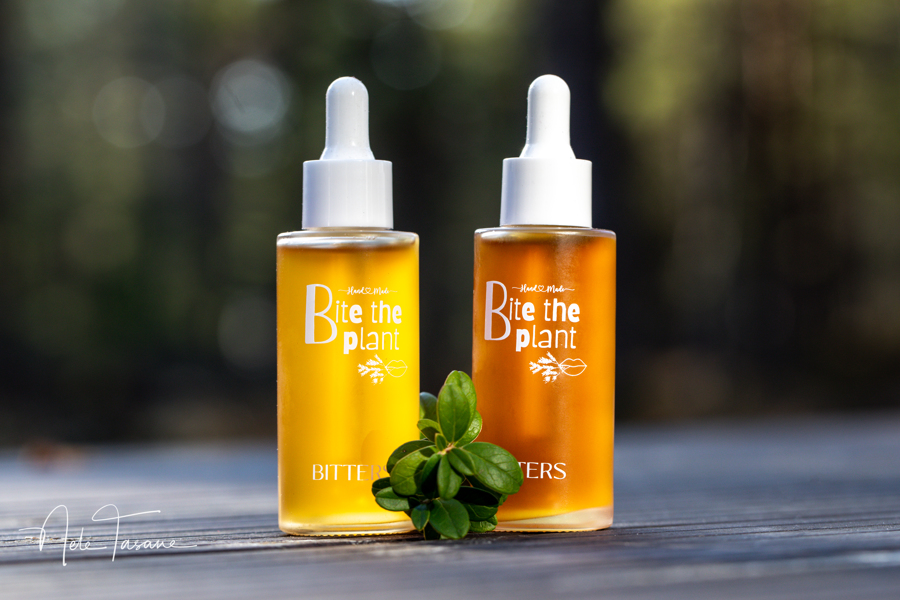
I make these bitters to support my own bile. Bile does a great deal in the body: it digests fats, helps absorb vitamins A, D, E and K and carries waste out. My gallbladder has been removed, so I take a pipette before every meal to give my body the timing signal to release bile when food arrives. Bitter herbs for low stomach acid work best as a blend: gentian leads, artichoke and dandelion root support bile, and ginger and fennel warm and balance it. More on the bitter herbs in the blend.
Both versions carry the same eight herbs and the same bitter signal. The alcohol extract is the traditional, stronger choice. The apple cider vinegar version is alcohol-free and milder in taste. Choose the one you will take every day.
→ Choose your bitters: alcohol or apple cider vinegar
Frequently asked questions
How long does it take to raise stomach acid with bitters?
Many people feel lighter after the first meals. For low stomach acid, take bitters before every meal for two to three months.
Can low stomach acid correct itself?
When the cause is temporary, such as a stressful period, rushed meals or a short course of acid blockers, acid production often recovers once the cause is gone, and bitters support that. When the cause is age, bitters become a daily habit before meals.
Does low stomach acid cause acid reflux?
It can. Enough acid is the signal for the valve at the top of the stomach to close, and food that sits too long builds pressure from below. Bitters start digestion on time, so the stomach empties evenly.
Is low stomach acid linked to low iron and vitamin B12?
Yes. Stomach acid frees iron and vitamin B12 from food. If you feel tired and have signs of low stomach acid, ask your doctor for a blood test.
Can I take betaine HCl and digestive bitters together?
You can, but most people do not need both. Betaine HCl adds acid to one meal. Bitters prompt your stomach to make its own acid and also call for bile and enzymes, so they start the whole of digestion. Begin with bitters before every meal and give your own digestion the chance to find its rhythm again.
Can I take bitters for low stomach acid without a gallbladder?
Yes. My own gallbladder has been removed and I take bitters before every meal. The bitter taste still prompts stomach acid, and the liver keeps producing bile, which flows into the gut directly.
Are Swedish bitters good for low stomach acid?
They contain bitter herbs, but also laxative herbs. For daily drops before meals, a blend without laxatives fits better.

Triin Ülesoo is the founder of Bite the Plant. She has worked on her own health and digestion for 20 years and has made bitters since 2022, which she takes herself before every meal. Read Triin's story →
Read more
- Digestive Bitters: What They Are, How They Work and How to Take Them
- Digestive Bitters for Acid Reflux and Heartburn: Do They Help or Hurt?
Sources: Cleveland Clinic: hypochlorhydria, Healthline: low stomach acid and age, Feldman M & Richardson CT, Gastroenterology 1986, European Medicines Agency: gentian root.